VOLUME I
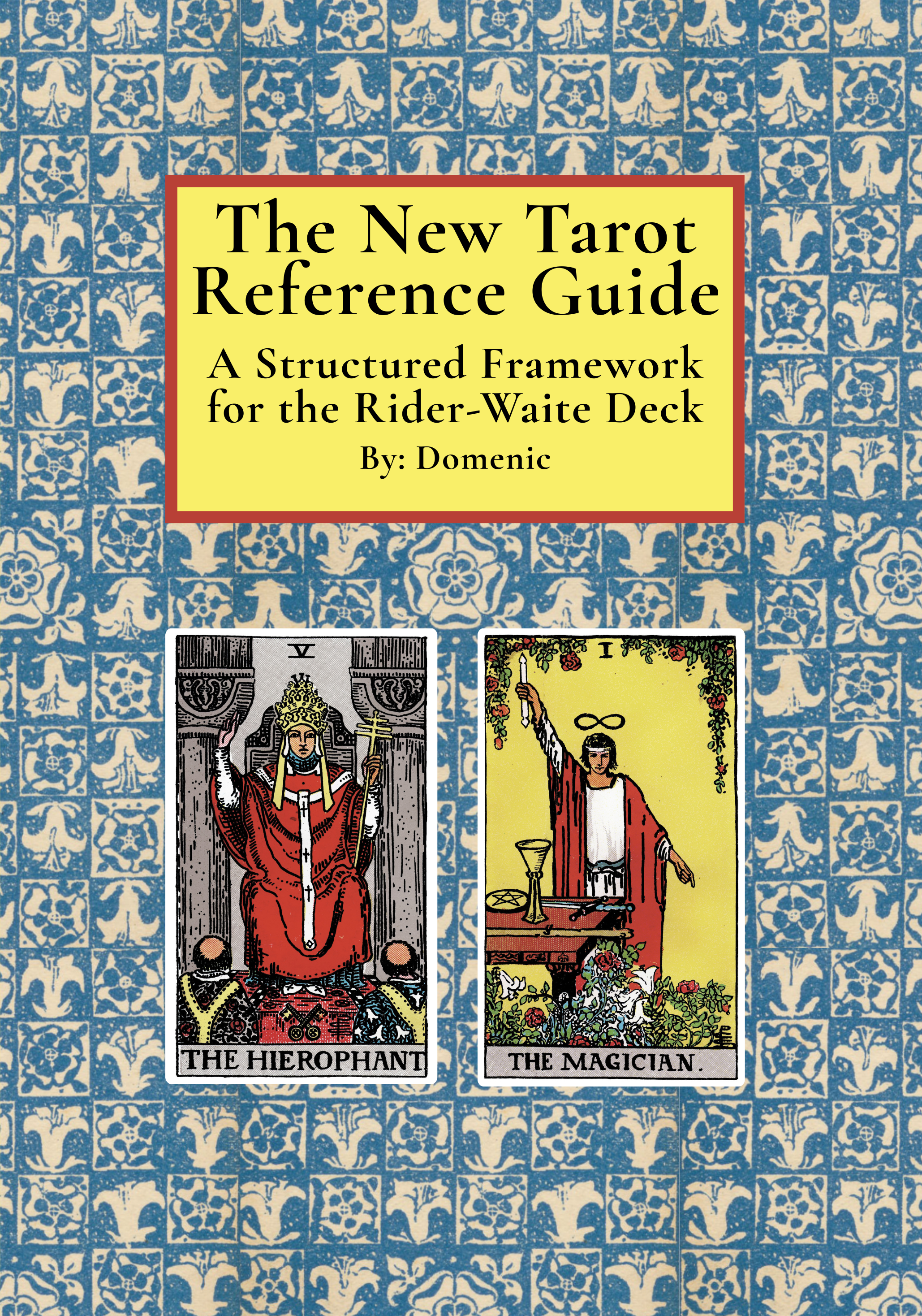
The New Tarot Reference Guide
A Structured Framework for the Rider-Waite Deck
Learn the system. Understand why the cards mean what they mean.
The New Tarot Reference Guide introduces the framework used throughout the series.
It gives new and experienced readers a clear, repeatable way to understand tarot without relying on keywords or intuition alone.
WHAT THIS VOLUME GIVES YOU
A clear framework for understanding Rider-Waite tarot
A repeatable method you can use across the deck
Structure for learning without memorizing endless keywords
Practical ways to connect symbols, meaning, and context
A stronger foundation for single-card and multi-card readings
A system you can build on as your reading skills develop
WHAT YOU WILL LEARN TO DO
Break card meanings into clear, understandable parts
Recognize patterns that repeat throughout the deck
Understand why symbols matter within each card
Compare cards using the same consistent framework
Apply card meanings to real-life questions and situations
Combine multiple cards into a coherent reading
Use structure to support intuition instead of replacing it
INSIDE THE GUIDE
The Four-Layer Model for Symbolic Analysis
Learn to read symbols through literal, traditional, contextual, and relational meaning.
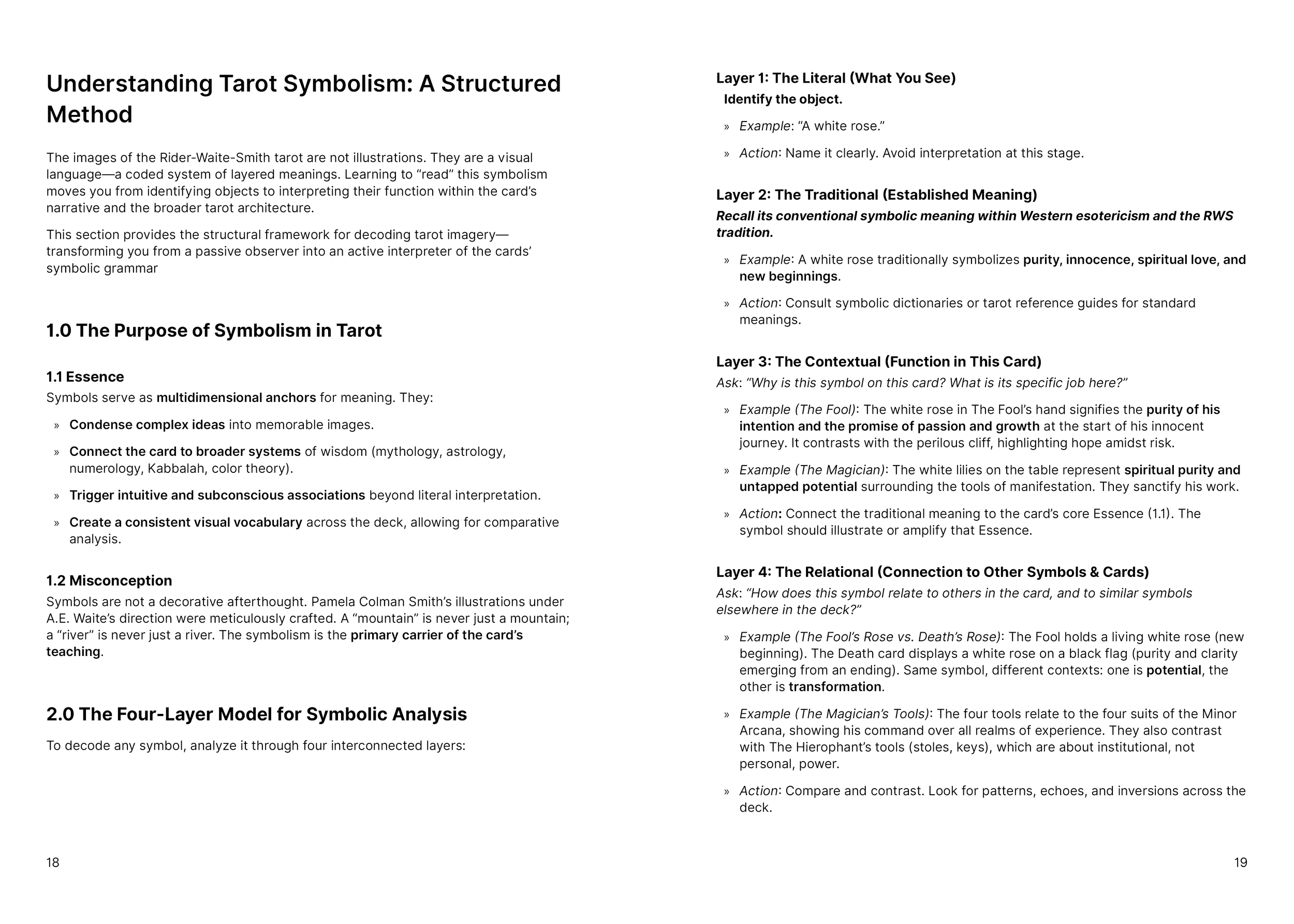
Use one consistent structure to understand cards, compare meanings, and build readings
The Six-Part Card Analysis
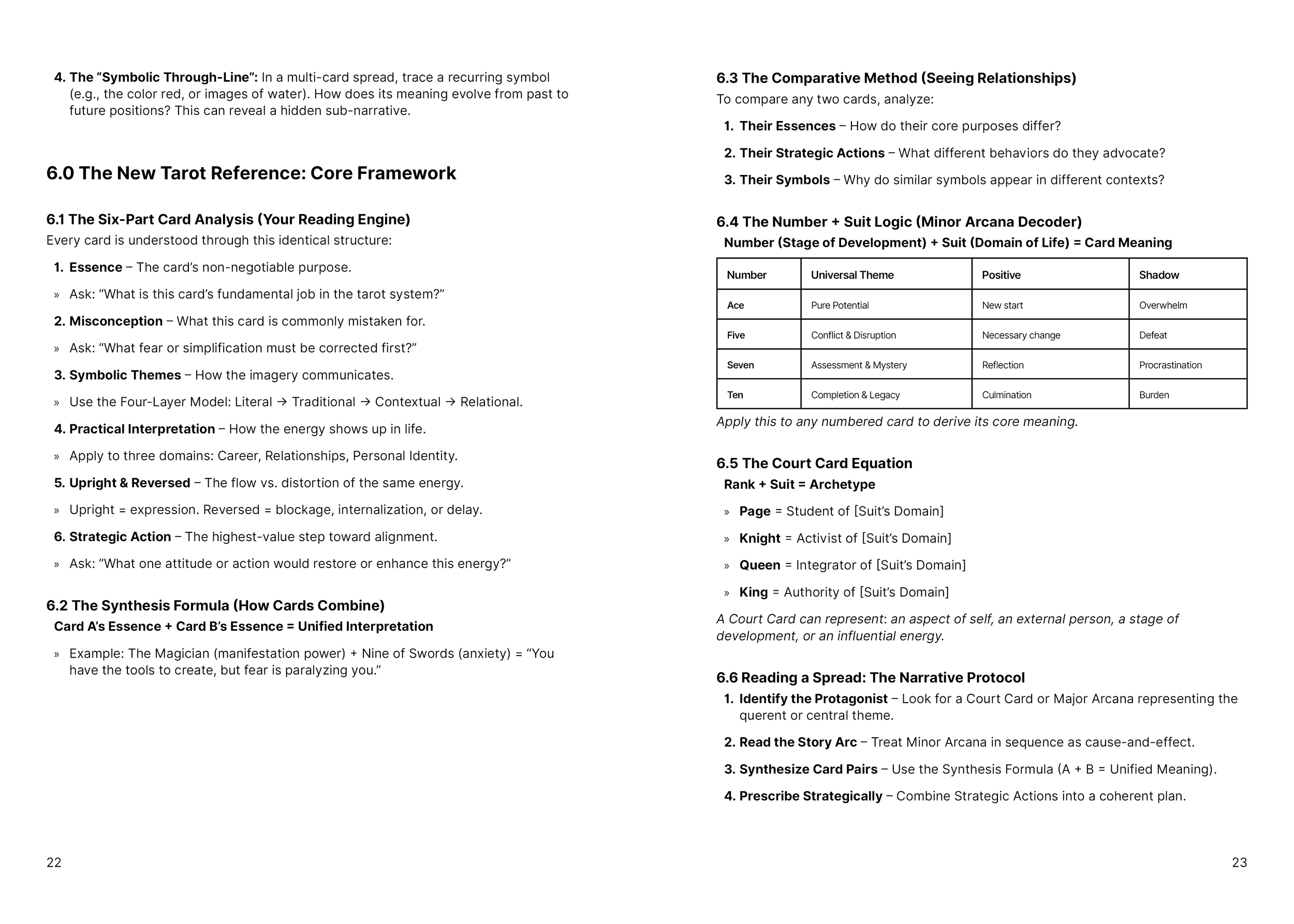
BUILT FOR
New tarot readers who want a clear place to begin
Structured learners who prefer an organized method
Critical thinkers who want to understand why meanings work
Visual learners who benefit from charts, models, and examples
Readers who want more than memorized keywords
Intuitive readers looking for a stronger foundation
Experienced readers who want greater consistency
PART OF A FIVE-VOLUME SYSTEM
Volume I builds the foundation.
The Guide introduces the core structure used throughout The New Tarot Reference.
Volume I: Learn the framework
Volume II: Apply it across all 78 cards
Volume III: Understand how spreads are built
Volume IV: Strengthen your skills through practice
Volume V: Analyze how cards interact
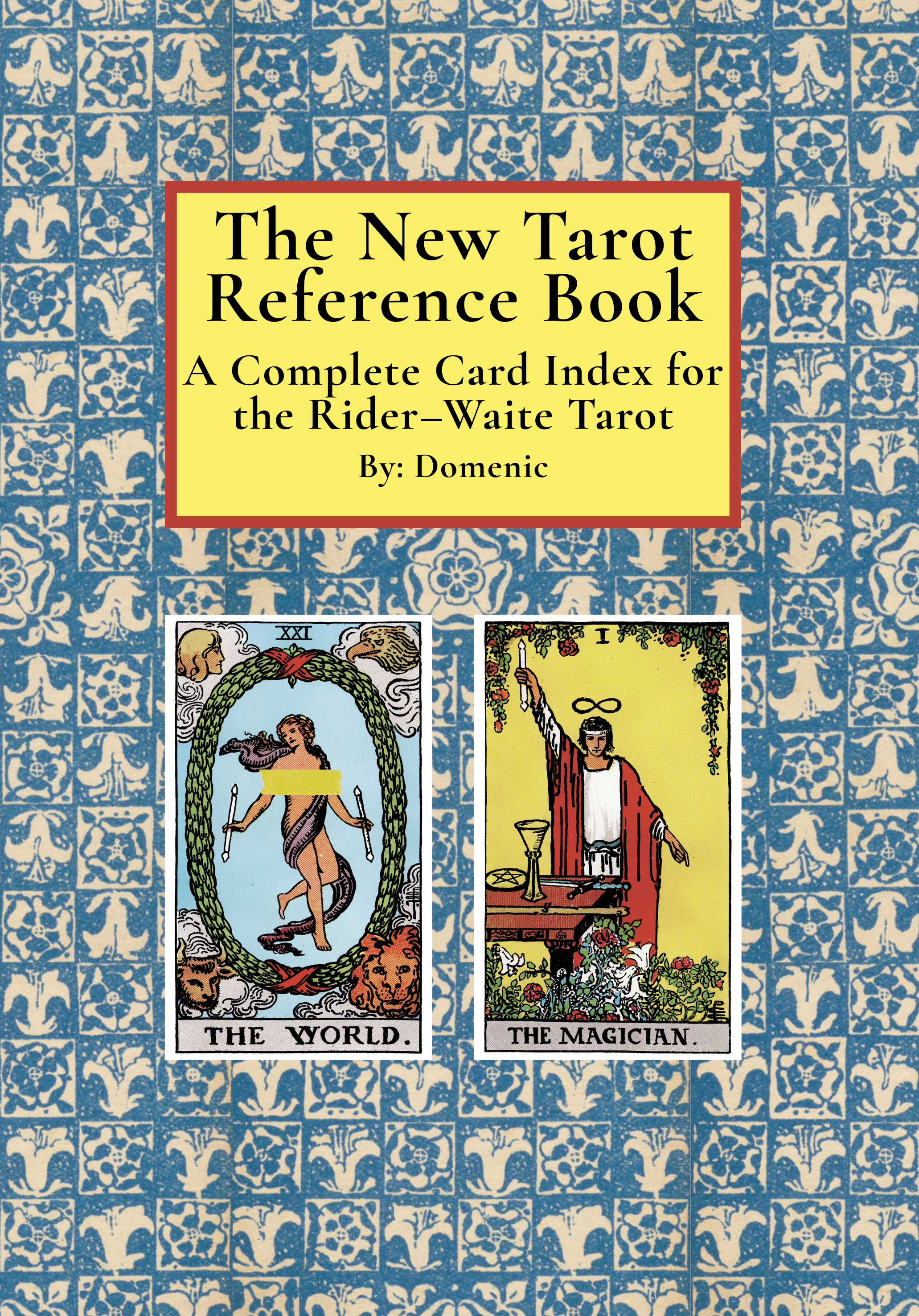
IS THIS THE RIGHT VOLUME FOR YOU?
New to tarot? The Guide gives you a structured place to start
New to TNTR? Volume I introduces the complete framework
Already read tarot? Use it to add structure and consistency
Tired of memorizing keywords? Learn how meanings are constructed instead
Prefer learning through systems? This volume explains the logic behind the deck
Want every card explained individually? Continue with Volume II
Need all five books? No. Each volume can be used independently
SEE THE BOOK FOR YOURSELF
See the layout, frameworks, examples, charts, and reference material inside Volume I.
Core Reading Framework
Six-part card analysis
Consistent interpretation across the deck
Structure that supports intuition
Symbolic Analysis
Four-Layer Model
Symbol Decoder questions
Learn why imagery matters
Major Arcana
The Fool’s Journey
Archetypal progression
Practical interpretation
Minor Arcana
Number Theory Framework
Number + suit logic
Four elemental journeys
Court Cards
Sixteen archetypes of expression
Rank + suit structure
Identity and development patterns
Reversals
Seven reversal categories
Blocked, delayed, or distorted energy
Consistent reversed interpretation
Reading Multiple Cards
Card-pair synthesis
Narrative sequencing
Building one coherent story
Three-Card Readings
Three-position diagnostic grid
Three-step synthesis method
Clear, concise interpretation
The Celtic Cross
Ten-position analytical grid
Four-stage synthesis
From interpretation to action
Original Spread Frameworks
Elemental balance
Decision analysis
Transformation analysis
Quick Reference Tools
78-card overview
Major and Minor Arcana charts
Court Card Matrix
Advanced Combination Tools
Challenging card groups
Comparative analysis
Complex reading synthesis